
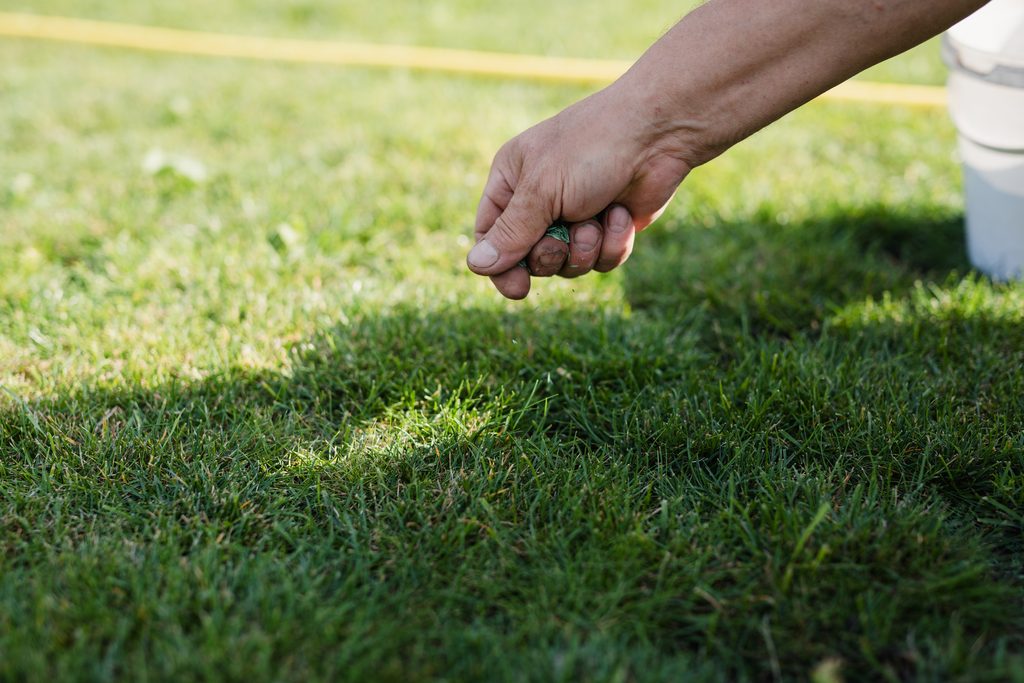
September is an important month for Tulsa lawns. Cooler temperatures create a good opportunity to repair thin tall fescue, but they also signal the beginning of winter weed germination.
That can create a conflict between two common fall lawn services: applying pre-emergent and overseeding.
In most cases, a traditional pre-emergent should not be applied to an area that will be overseeded. Understanding why, and deciding which service matters more for your lawn, can help you avoid wasting seed or missing an important weed-prevention window.
What Does Fall Pre-Emergent Do?
Pre-emergent herbicides help prevent certain weeds from becoming established. They create a control zone in the soil that affects susceptible seeds as they begin to germinate.
In Tulsa, fall pre-emergent applications commonly target winter annual weeds such as:
- Henbit
- Chickweed
- Annual bluegrass
- Other weeds that germinate during cooler fall conditions
These weeds may not become highly visible until winter or early spring, but their life cycle often begins months earlier. That is why fall prevention needs to happen before weeds appear.
Pre-emergent does not generally kill weeds that are already growing. Its main purpose is to stop targeted weeds during germination.
Why Can Pre-Emergent Interfere With Overseeding?
Pre-emergent products do not distinguish between an unwanted weed seed and desirable grass seed. A product designed to prevent weed germination may also keep newly planted tall fescue from establishing.
Applying pre-emergent and then spreading grass seed over the same area can result in:
- Poor seed germination
- Weak root development
- Thin or uneven establishment
- Wasted seed, water and labor
Some products and application strategies may be compatible with certain seeding situations, but this depends on the active ingredient, turf species, timing and product label. Avoid assuming that every fall weed-control product can be used around new seed.
Which Service Should Your Lawn Receive?
The right choice depends on the type and condition of your turf.
Thin Tall Fescue
Fall is the primary recovery season for tall fescue in Tulsa. Because fescue grows in clumps and does not spread aggressively, areas lost to summer heat, drought, disease or traffic may not fill back in on their own.
If the lawn needs overseeding, establishing new grass may be the priority. Pre-emergent may need to be skipped, delayed or handled with a carefully selected alternative.
Before overseeding, correct the problems that caused the turf to thin. Check for compacted soil, poor irrigation coverage, improper mowing, excessive shade and unresolved pest or disease issues.
Established Tall Fescue
If the fescue remains dense and does not need additional seed, a fall weed-prevention program may be appropriate. Healthy turf also helps limit the open space where weeds can become established.
The application still needs to be selected and timed for the specific lawn.
Bermuda or Zoysia Lawns
Bermuda and zoysia lawns generally are not seeded with tall fescue unless winter overseeding is an intentional part of the management plan. If no overseeding is planned, fall pre-emergent may help reduce winter weeds that become noticeable as warm-season turf enters dormancy.
However, plans can differ for mixed lawns, shaded areas or properties with both warm-season turf and tall fescue. Each area may need to be treated separately.
Plan Around the Entire Property
A lawn does not always need one uniform fall treatment. A Tulsa property might have Bermuda in sunny areas and tall fescue beneath mature trees. One section may benefit from fall weed prevention while another needs aeration and overseeding.
Irrigation should also be part of the plan. New seed requires light, frequent watering at first, followed by a gradual transition to deeper watering as roots develop. Existing turf generally needs a different schedule. Correcting broken heads, dry spots and uneven coverage before seeding can improve establishment.
Timing and Product Labels Matter
The required interval between pre-emergent application and seeding varies by product. The waiting period after grass establishment can also differ. Always follow the label rather than relying on a general rule.
A professional lawn evaluation can help determine:
- Which turf areas need overseeding
- Where fall pre-emergent is appropriate
- Whether soil compaction should be addressed
- How irrigation should be adjusted
- How to prevent one service from interfering with another
Choose the Priority Before Work Begins
Fall pre-emergent and overseeding are both useful services, but they are not automatically compatible. Applying both without a coordinated plan can prevent the new grass from establishing.
Roark Landscape can evaluate your Tulsa lawn, identify which areas need fall weed prevention or fescue recovery, and develop a plan based on the turf, irrigation and condition of your property.
Contact us today to get started!