
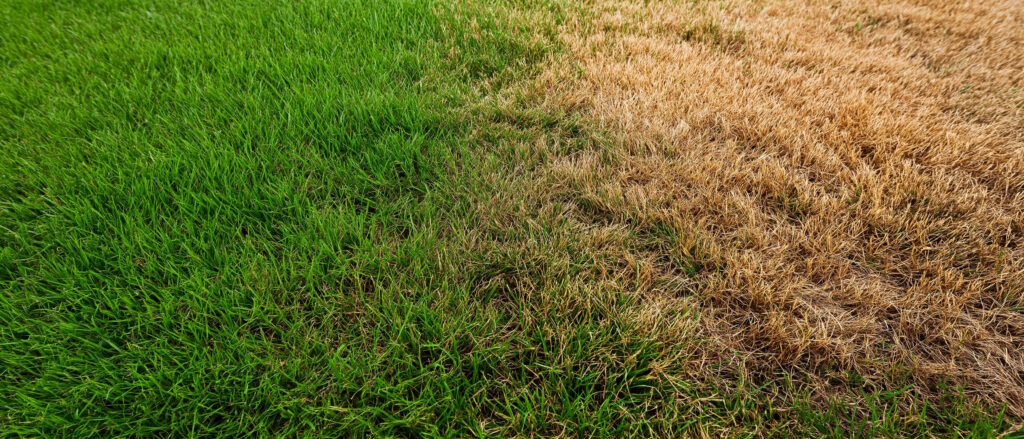
Brown patches can appear quickly in a Tulsa lawn during the hottest part of summer. While it may be tempting to assume the grass simply needs more water, discoloration can have several possible causes.
Heat, uneven irrigation, turf disease and insects can create similar-looking damage. Identifying the real problem is important because the wrong response can make your lawn’s condition worse.
1. Heat and Drought Stress
Tulsa’s summer heat places significant stress on turfgrass, especially during extended dry periods. Grass affected by drought stress may turn dull green, gray or brown. The damage often appears first on slopes, near pavement or in areas with thin soil.
Tall fescue is especially vulnerable because it is a cool-season grass. It may thin or go dormant during hot weather, even when the rest of the lawn looks healthy.
Before increasing your watering schedule, check the soil several inches below the surface. A lawn can look dry while still having adequate moisture near the roots.
2. Grubs or Armyworms
Insects can also cause sections of turf to decline rapidly.
Grubs feed below the soil on grass roots. Damaged turf may feel loose or lift easily from the ground because the roots have been eaten. You may also notice increased activity from birds or other animals searching for grubs.
Armyworms feed on grass blades and can cause noticeable damage in a short period. A lawn that looked healthy several days ago may suddenly appear thin, brown or closely clipped.
Early identification is important because insect populations and damage levels can change quickly.
3. Uneven Irrigation Coverage
Sometimes the issue is not how long your irrigation system runs, but where the water is actually going.
Clogged nozzles, damaged sprinkler heads, poor pressure and incorrect spray patterns can leave certain areas without enough water. Brown patches caused by uneven coverage may follow the shape of a sprinkler zone or repeatedly appear in the same location.
Watch your system operate and look for:
- Sprinkler heads that do not rise properly
- Water spraying onto pavement
- Dry areas between sprinkler patterns
- Excessive runoff or pooling
- Broken or tilted heads
An irrigation inspection can help determine whether your lawn needs more water or simply better coverage.
4. Fungal Disease
Heat combined with humidity can create conditions that support turf diseases such as brown patch. Tall fescue is particularly susceptible during warm, humid weather.
Disease damage may appear as irregular brown areas that continue expanding even when the soil is moist. Watering late in the evening can increase risk because the grass blades remain wet overnight.
However, brown grass does not automatically mean fungus. Drought stress and insect damage can look similar, so proper diagnosis should come before treatment.
5. Mowing Too Short
Cutting grass too low removes much of the leaf surface the plant needs to produce energy. It also exposes the soil to more sunlight, which can cause moisture to evaporate faster.
Scalped areas may turn brown after mowing, especially on uneven ground. Dull mower blades can add stress by tearing the grass instead of creating a clean cut.
During stressful summer weather, maintaining an appropriate mowing height can help protect the lawn’s root system and improve its ability to recover.
Look Beyond the Color
Brown patches are a symptom, not a diagnosis. Adding more water, fertilizer or fungicide without identifying the cause can waste resources and place additional stress on the turf.
Roark Landscape can evaluate your commercial or residential lawn, irrigation coverage and overall growing conditions to determine what may be contributing to the damage. With the right diagnosis and a plan for fall recovery, many struggling areas can be improved as temperatures begin to cool.
Contact Roark Landscape to schedule a professional lawn or irrigation evaluation for your Tulsa property.